 Jawad Abdullah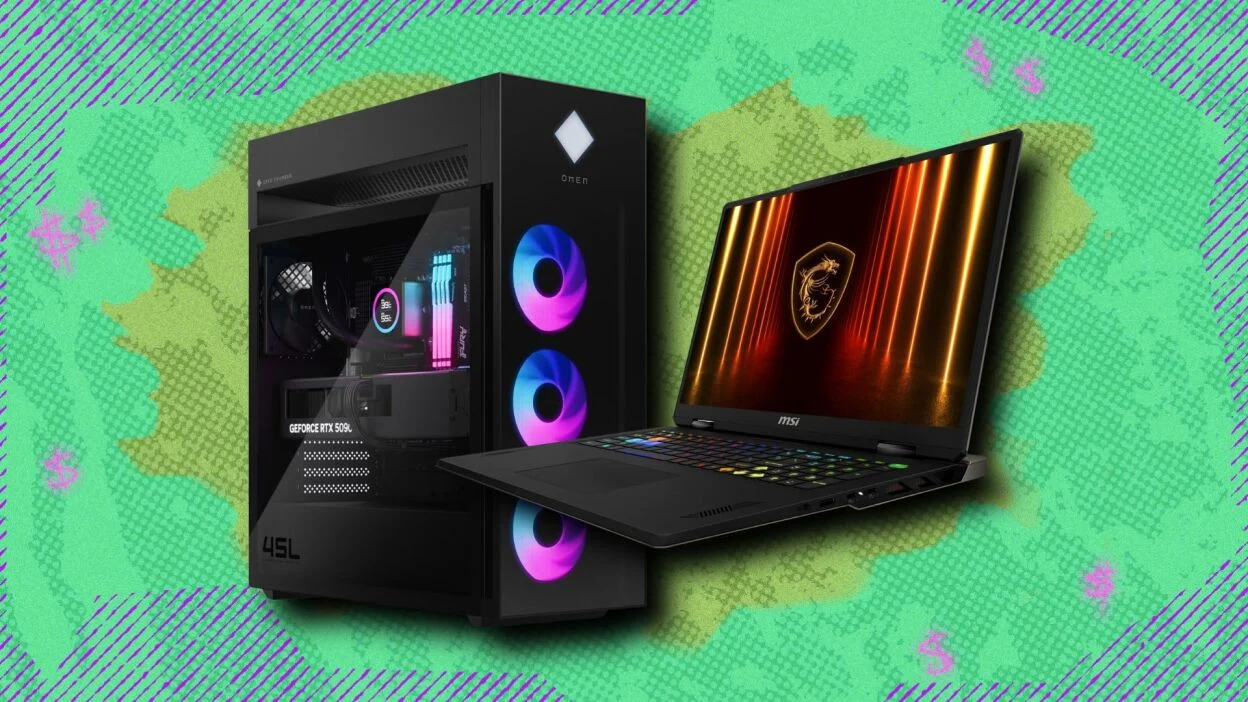
If you’ve decided to invest in a gaming system, your first major choice comes down to the age-old gaming laptop vs desktop debate. The best gaming laptops are proving serious competition for even the best gaming PCs these days, so whereas previous generations offered a clear-cut decision, today’s market is a little more blurred.
Ultimately, the gaming laptop vs desktop judgement comes down to how you will use your machine – after all, if you know you need to take your system on the go, your choice is already made. However, diving a little deeper into the performance, upgradeability, and value for money in these systems can prove enlightening for those who don’t have such an easy decision on their hands.
That’s why we’re rounding up all the differences between gaming laptops and gaming desktops here, as well as who should invest in each one. We’ve evaluated the current selection based on prices, availability of components, the performance under the hood, and the level of customization on offer, so that you can make the right call for your setup.
Gaming laptops vs desktops at a glance
Gaming laptop
- Portable
- No extra purchases necessary
- Can stand in for a work machine
Gaming desktop
- More powerful components
- Upgradeable
Performance
The differences in performance between gaming laptops and gaming desktops is certainly less pronounced than it used to be. Desktops certainly do stretch just ahead – they’re able to offer higher-end components without having to sacrifice other laptop features like form factor and battery. However, when it comes to the entry level and mid-range bracket, things get a little muddier.
Gaming desktops do have more space for more powerful components than gaming laptops. That means manufacturers can use higher grade gear under the hood, bumping GPU specs and levelling up CPU models without breaking the bank. By contrast, gaming laptop brands need to consider weight, battery, temperature, and form factor when selecting these components, which means you’re less likely to find top of the range tech in these smaller devices – we’re talking Nvidia’s RTX 3090 and 3080 Ti GPUs, for example.
Of course, better components means better performance straight out of the box, but gaming PCs can also draw the best out of this tech as well. With larger power supplies and more sophisticated cooling tech, your PC will run high-end specs much better when in desktop format as well.
Still, gaming laptops are certainly catching up, with the best Alienware laptops offering incredibly efficient systems that can close the gap between a high-end laptop and a mid-range PC considerably.
Plus, performance is only going to factor into your gaming laptop vs desktop decision if you’re shopping right at the top end of the price range. Otherwise, at the mid-range and entry level brackets, there’s going to be less of a noticeable difference aside from cooling.
● Winner: Desktop
Portability
This is the easiest factor to help you decide between a desktop and a laptop: do you need to carry it around? Sure, there are ways to make desktop PCs incredibly small, especially with the popularity recently of the mini-ITX chassis and boutique micro-builds. Despite that, carrying around a mini-ITX PC is still far, far harder than just throwing a gaming laptop into a backpack, even when you’re looking at the chunkiest ones out there.
Better still is the fact that most gaming laptops have, in fact, become a lot lighter and thinner. You only need to look at options like Razer’s Blade Advanced 15 or Blade 17 Pro to get a MacBook-like experience with the raw performance needed to run some of the latest AAA titles. That makes it a perfect option if you absolutely need to have that sort of gaming capability with the advantages of being able to easily take it on a plane or one a long road trip. Better still if you plan to do gaming at several different desks, which might save you from needing multiple desktops at each station.
● Winner: Laptop
Upgradability
That doesn’t mean gaming desktops are cheap, but they do offer one aspect that is also a little more challenging to find in many gaming laptops: upgradability. When a component in your desktops starts becoming a performance bottleneck, or just stops working entirely, it’s relatively straightforward to just replace it without needing to replace everything else inside.
That’s not the case with a gaming laptop, especially thinner ones where all the components are soldered onto the main board. Many don’t even allow you to add more RAM modules or additional SSDs once you’ve made your purchase. That isn’t to say all are like that. Some gaming laptops, such as the Lenovo Legion 5i lets you install additional RAM or replace what is there entirely, while the Alienware Area-51M gives you multiple M.2 slots for additional SSD space down the road.
● Winner: Desktop
Customization
Of course, if you’re looking for a long-term investment (and considering some of the more high-end price tags, we’d hope you are), gaming desktops do carry one major benefit over laptops – upgradeability and customization. Very few gaming laptops ship with the ability to swap out components, and those that do certainly charge you for the luxury. Some models will allow you to upgrade to the best RAM for gaming or swap out for one of the best SSDs here and there, but this is still a relative rarity.
By contrast, many gaming PCs are built to be upgraded. You’re getting the freedom to swap parts in and out to ensure your rig is running the latest components, making for a much better long-term solution. Not only that, but you’ll also be able to customize cooling and RGB features in your tower as well.
This is a feature that gaming laptops simply can’t compete with. With their CPUs and GPUs hard-fixed to the motherboard, you’re buying a rig that will only run at peak performance for so long.
● Winner: Desktop
Price
Pre-built gaming desktops are generally cheaper than gaming laptops, by virtue of the fact that you’re not spending money on battery power, display performance, and that portable form factor. From a direct power comparison, then, a gaming desktop will work out at better value for money.
However, you will need to factor in additional costs for a gaming monitor, mouse, and gaming keyboard. While many gaming laptop owners do invest in these accessories, they’re not required straight out of the box (though a gaming mouse is a must-have, as there’s no playing on a trackpad after all). This means that a $1,500 gaming desktop could end up running closer to $2,000 once all your audio-visual gear is in place – something you don’t need to factor into a laptop purchase straight away.
Similarly, building your own PC is going to come with its own cost challenges. The last few years have taught us that upgraders are at the mercy of the market when it comes to components. GPU prices have spiked considerably in the last two years, and that’s when stock is even available. The overall cost of your build can far exceed the value packed into your components here, which means that key upgrade you’ve been saving for may be out of reach quickly.
It’s also worth noting that the portability of a gaming laptop can factor heavily into the price. These machines aren’t limited to the home, which means they can also easily double up as on-the-go work machines, potentially cutting an extra cost from the equation if you’re on the hunt for an all-in-one machine.
Overall, then, a pre-built gaming PC will likely offer up the best bang for buck price, a gaming laptop will offer solid value thanks to its all-in-one, flexible design, and a DIY PC will likely require considerable work to be cost-efficient. Once you take cheap gaming laptop deals and gaming PC deals into account, those savings can multiply as well.